
Marshall County Parole Versus Probation
Parole and probation both allow a person to live in the community under rules, but they begin in different ways. The Mississippi State Parole Board decides whether an eligible state prisoner receives parole. MDOC then carries out the release process, while its Division of Community Corrections supervises the person. Probation usually begins with a sentence from a court. It can be imposed instead of confinement or as part of a sentence. The court order, not a Parole Board vote, is the source of that status.
Marshall County records may also use earned release supervision, often shortened to ERS, house arrest, or another community status. ERS is a statutory MDOC release path. It is not Marshall County parole. House arrest in Marshall County is a circuit-court function described through the county court system, while MDOC agents supervise the person under the court order. None of these Marshall County supervision labels means that a conviction or sentence vanished. They describe who has authority and what stage the sentence has reached.
| Status | Who starts it | Best verification record |
|---|---|---|
| Parole | Mississippi State Parole Board | Board action sheet, MDOC record, and parolee search |
| Probation | Sentencing court | Judgment or probation order and Community Corrections confirmation |
| ERS | MDOC under state law | MDOC offender history, time computation, and supervision record |
| House arrest | Circuit court | Court order plus MDOC supervision context |
- Parole
- Conditional release from prison after a board decision, with the sentence still active under supervision.
- Probation
- A court-ordered community sentence supervised under the terms of the judgment.
- Discharge
- The formal end of the relevant sentence or supervision status, shown by an official record.
- Absconder
- A supervision status tied to an alleged failure to report or remain available, not a casual label for a missing person.
Verify Marshall County Post-Release Supervision
The most direct online starting point for Marshall County parole is the separate MDOC Parolee Search. It accepts first name, last name, MDOC ID, city, and county. Select Marshall when narrowing by county. Results can identify the MDOC number, name, Marshall County supervision location, offense, and a detail view. A match supports that the person is in the parole system. It does not show that the whole sentence is over. A miss also does not prove discharge because probation, ERS, interstate supervision, stale identifiers, or a completed sentence may require another record.
Use the MDOC number whenever it is known for a Marshall County record. That number connects the statewide inmate record, parolee record, Community Corrections inquiry, Records Department, and Parole Board request. Marshall County names repeat and spellings vary. Compare identifying details without publishing a supervisee's home address or private conditions. The wider Marshall County released-inmate search and release-record path is useful when the last custodian is uncertain.
- Search the parolee tool by MDOC ID first, then by exact name and Marshall County if needed. Record the matched MDOC number and public location.
- Check the MDOC offender record. A prison location means release has not been proved. A community location may reflect parole, probation, ERS, or another status.
- For parole, request the hearing date and releasable action sheet from the State Parole Board. Treat a grant as a decision, not proof of physical departure.
- For probation or house arrest, obtain the judgment or later order from the sentencing court. That order states the legal basis for supervision.
- Call the Marshall Probation & Parole Office before visiting. Ask it to confirm the correct supervising unit where public disclosure permits.
- For durable proof of discharge, request the discharge certificate or offender history from MDOC Records rather than relying on a missing search result.
The official parolee form shows the Marshall County parole search path. Review the MDOC released-to-parole search before using the captured interface below.
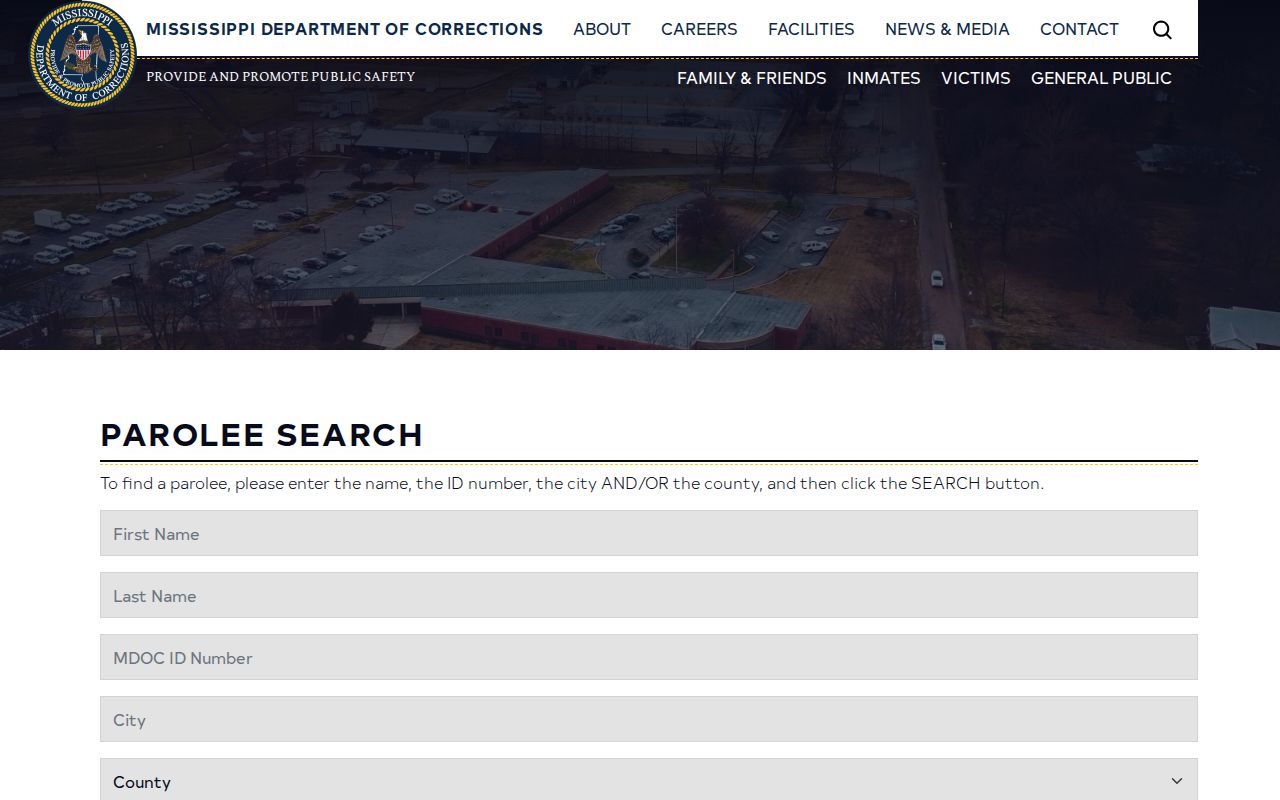
The image demonstrates the available search fields, while the live result and source records must supply the current Marshall County supervision status.
Note: Record the agency, date, public result, and office response so a later status change does not erase the basis for the verification.
Marshall County Supervision Office
Marshall County has a local MDOC Community Corrections location that is separate from Marshall County Correctional Facility. The Marshall Probation & Parole Office provides the local handoff after an MDOC record points to parole, probation, ERS, or house arrest. Its role is supervision. It does not replace a sentencing order, Parole Board action, or MDOC discharge record. The official page publishes no standard walk-in hours or check-in procedure, so call before visiting.
Marshall Probation & Parole Office
690 Highway 4 East
Holly Springs, MS 38635
662-551-2371
Fax: 662-252-4043
Call before visiting; no public walk-in hours were verified.
Give the person's full name and MDOC ID when making a lawful Marshall County status inquiry. Ask which office has the case and whether the public record identifies a supervision type or final discharge. Do not seek a private residence, appointment details, or confidential conditions. Those limits protect the supervisee and staff while still allowing a Marshall County record-based status check.
The official location page is shown in the matching capture. Open the MDOC office listing to confirm the contact before relying on the image.
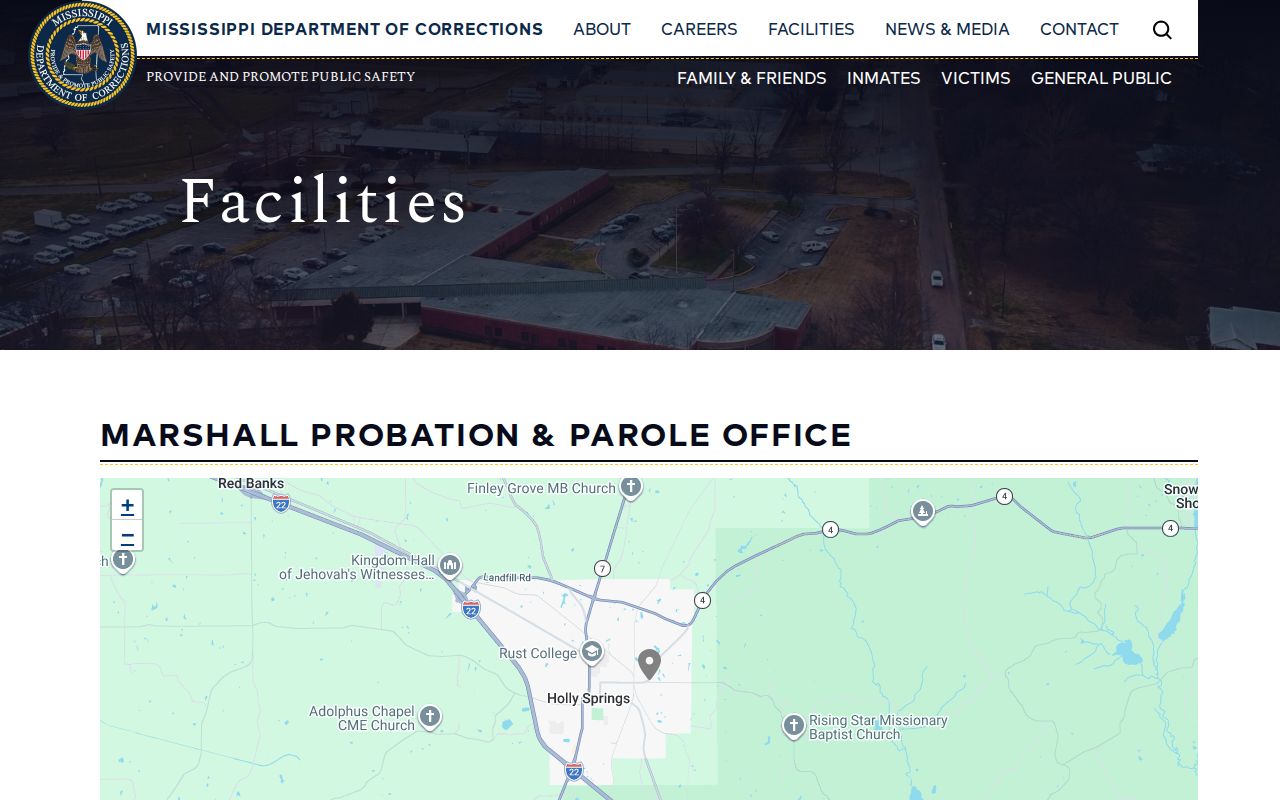
This local office listing helps route a public supervision question, but the statewide record remains the source for MDOC status and discharge history.
Marshall County Parole Hearing Records
A Marshall County parole eligibility date, hearing, grant, and physical release are four separate milestones. Eligibility means the person may be considered under the current law. A hearing means consideration occurred or was scheduled. A grant is the Board's decision. Actual departure can still depend on an approved release plan, residence review, detainer checks, and MDOC processing. Marshall County supervision begins only after the person is released to that status.
No verified current public hearing calendar, Marshall County calendar, decisions database, or results page was found. For one person, contact the State Parole Board with the MDOC number and ask for the hearing date and releasable action sheet. The Board's official contact is 239 North Lamar Street, Suite 501, Jackson, MS 39201; 601-576-3520; fax 601-576-3528. The action sheet may use terms such as grant, denial, setoff, revocation, or rescission. A setoff is the period before the next possible consideration.
The official agency listing confirms how to contact the decision-maker. Check the Mississippi State Parole Board page before reviewing the captured listing.
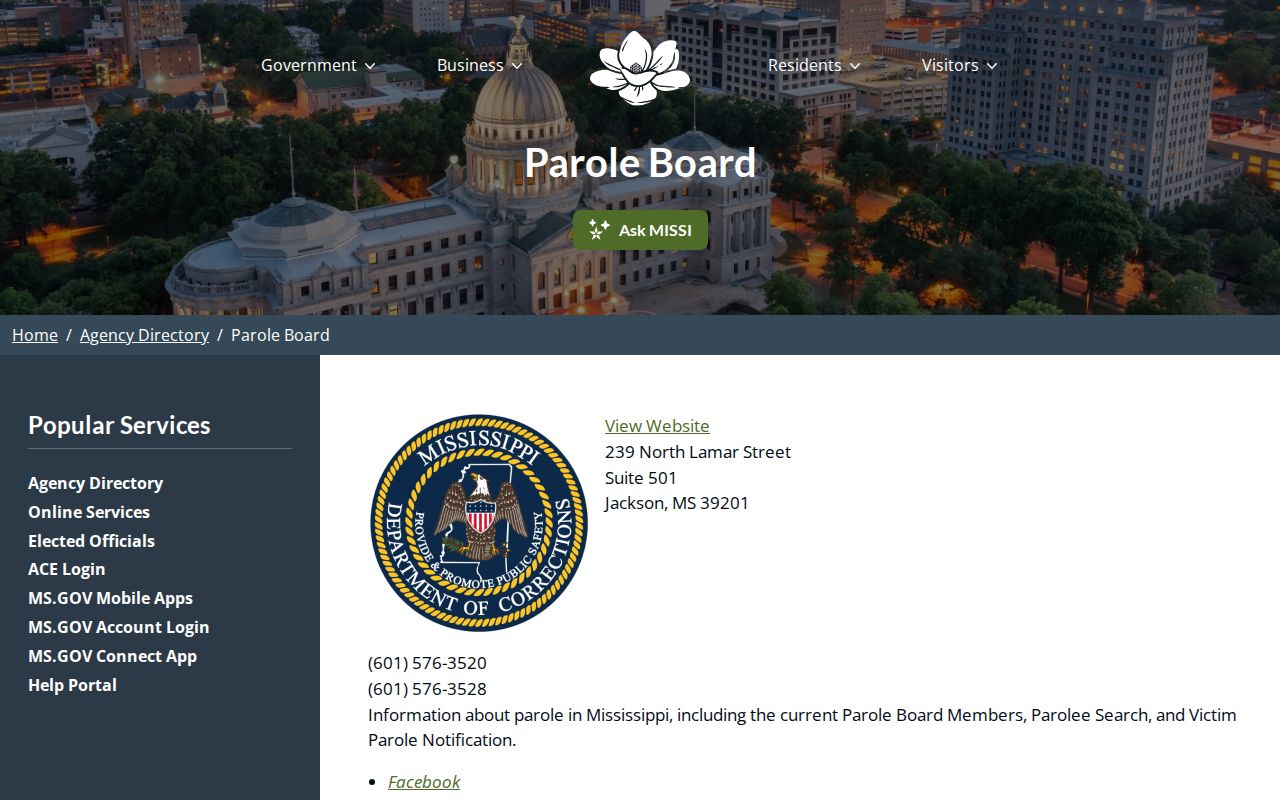
The capture shows the public contact channel, not a hearing calendar or a searchable decision system.
Marshall County Absconder Warrant Checks
Marshall County supervision conditions come from the court order, Parole Board action, and MDOC rules that apply to the individual case. A claimed violation may lead to a warrant, arrest, return to custody, and a revocation process. Revocation means the authority considers ending community supervision and returning the person to confinement. A Marshall County violation is not proved by rumor, an old post, or a missing parolee-search result.
No official statewide public absconder search or Marshall County absconder list was verified. The parolee search is not labeled as a warrant tool. Therefore, a miss cannot prove that no warrant exists. Confirm a public warrant with the issuing court or the Marshall County Sheriff's Office. Confirm supervision context with Community Corrections. If the case began as probation, request the revocation petition and order from the sentencing court. If it began as parole, ask the Board and MDOC for the releasable action and movement history.
Mississippi SAVIN and VINELink may provide notice of certain custody changes for MDOC offenders and participating jail records. They do not serve as a complete public warrant archive. If an alert shows return, transfer, or absconding-related movement, call the source agency named in the event and ask what that event means.
Note: A transfer, violation hold, or return to custody does not establish a new conviction; the related order explains the legal event.
Marshall County Supervision Discharge Records
Marshall County supervision ends through a formal record, not because a name stops appearing online. A Marshall County parolee may reach the lawful end of parole or receive a discharge. A probationer may complete the court-ordered term, obtain an early termination order where legally available, or return to court after an alleged violation. ERS remains under MDOC jurisdiction until the point set by law. Each Marshall County path has its own record custodian.
For an MDOC status, ask the Records Department for the offender history, release or discharge date and type, and discharge certificate. MDOC says formal requests to examine or copy records must be written, not made by telephone. The agency contact page lists MDOC Records Department channels. Provide the MDOC ID, full name, date of birth if known, conviction county, facility, and a narrow date range. For a felony probation case, ask the Marshall County Circuit Clerk for the original judgment and any completion, termination, or revocation order.
Mississippi's Public Records Act, Miss. Code §§25-61-1 through 25-61-19, supports requests for public agency records subject to lawful exemptions and redactions. It does not make private supervision details public. Ask the custodian for the segregable public portion and the authority for any withheld part. A final discharge record answers the limited status question more clearly than a collection of old search screens.
If one record shows discharge while another still shows an active community location, send both dated records to the agency that created the newer status. Ask which entry controls and whether a correction or later order exists. The answer should identify the supervision type, effective date, and source record without exposing private reporting terms. Keep the written reply with the discharge certificate or court order.